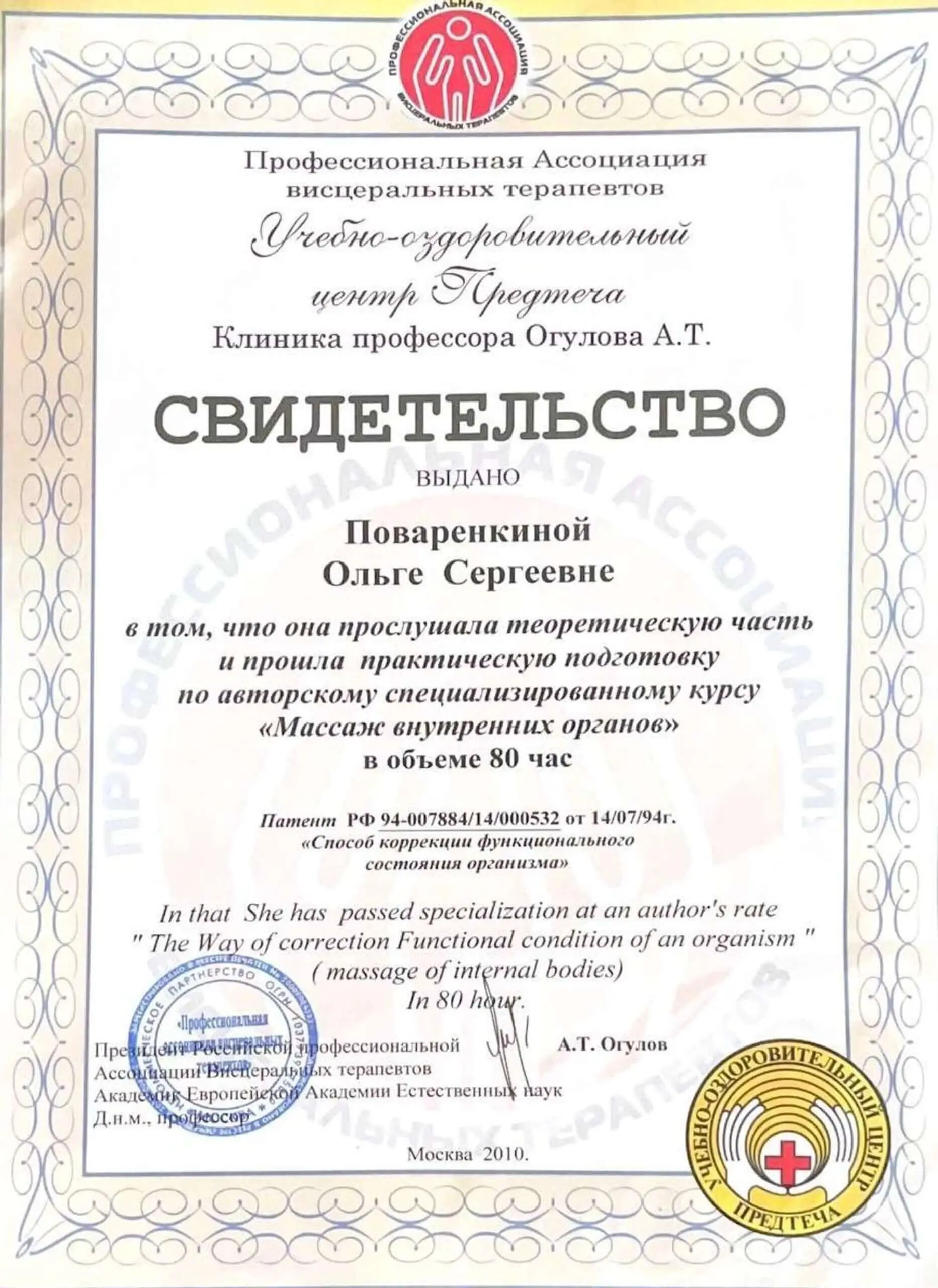
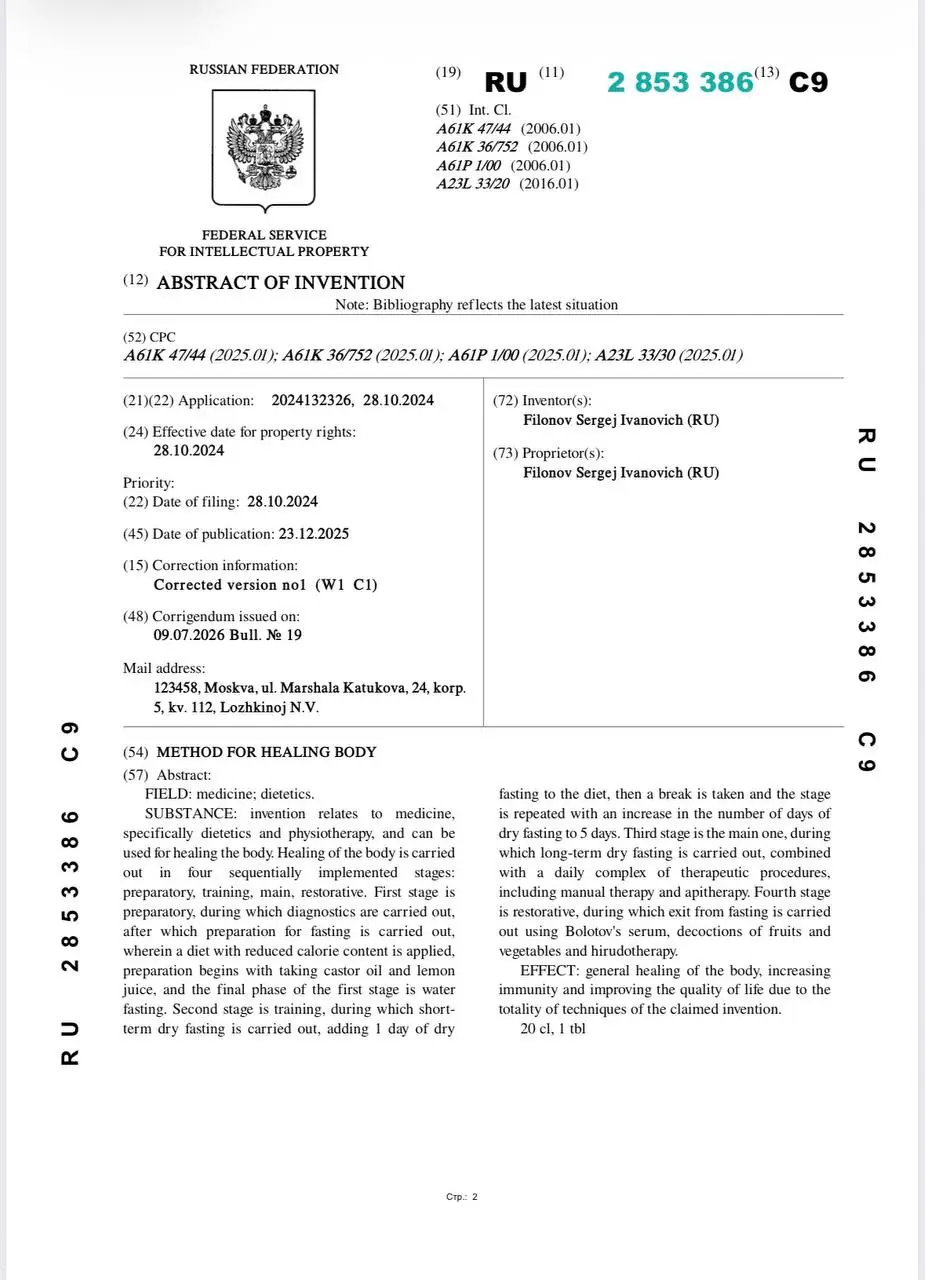
In my practice there are many examples of successful infertility cures
Unless there is congenital pathology and absolute sterility, therapeutic fasting is very effective in eliminating many causes of infertility.
● All chronic infectious foci are destroyed, adhesions and scars are dissolved, erosions disappear, and the vaginal microflora is restored to normal. This is due to the powerful stimulation during the dry fasting anti-inflammatory and immune-stimulating mechanisms.
● Normalizes the work of the entire gastrointestinal tract, failure in which – one of the causes of pathology of gynecological diseases (myomas, mastitis, cysts)
● The huge amount of free forms of sex hormones flooding the bloodstream during fasting leads to a sharp rise in sexuality. Contrary to popular belief, starvation does not suppress sexuality, but rather intensifies it.
● Normalization of hormonal background, full follicle maturation and elimination ofovarian dysfunction. A group of women aged 22 to 25 years during the Muslim fast of Ramadan, was examined to see how fasting affects the content of progesterone and prolactin in blood plasma, and how it affects the physiology of childbearing in women. The results showed that 80% of them had decreased plasma prolactin levels, while progesterone levels were unchanged. This study shows the importance of fasting in the treatment of infertility caused by elevated prolactin, so that when prolactin levels fall during fasting, a woman’s natural fertility is restored.
Rarely any woman suffers from absolute infertility, mostly infertility is the result and consequence of some diseases.

I have an acquaintance who breeds aquarium fish, and he is also systematically engaged in therapeutic fasting. He told me an interesting story about how he cured infertility in his fish. Here’s what he told me – “Have you come across the fact that the fish, repeatedly spawned in your aquarium, suddenly stop giving offspring. In the book MN Ilyin says that the cause of infertility of fish can be obesity of the insides, weakening the body and making it susceptible to infectious diseases. Starvation of adult fish even for a long time, as a rule, does not lead to negative consequences. With great interest I read about starvation, which is resorted to in livestock and poultry farming to restore the ability to reproduce in cattle, chickens, ducks, geese and turkeys. In the literature, I have seen reports of successful experiments on “rejuvenating” rats and restoring their ability to reproduce. (1973) notes that chickens stop laying as soon as they begin to get fat, and the birds that have lost weight begin to lay eggs again. As a result of application ofphysiologically useful fastingat poultry farms, the operationally productive age of poultry increased three-four times.At the same time their egg production, content in eggs of vitamins A, B1, B12 and carotene, shell thickness, egg fertilization and hatchability of chicks were higher than in the control.
S.A.A.Arakelyan, Y.S.Nikolaev, N.M.Amosov and other researchers believe that fasting normalizes biochemical processes, promotes excretion of poisons and toxins, mobilization of resistance forces of the body, tissue rejuvenation, autolysis of pathological formations, improves digestion and blood circulation, gives the body organs physiological rest. During starvation the organism uses its internal reserves and switches to internal (endogenous) nutrition. First of all fatty and weakened, morbidly altered tissue, as well as tumors, edemas, etc. are utilized. When switching to endogenous nutrition, the body uses up and burns not only its accumulated reserves but also metabolic slags. But can’t degenerating caviar be categorized as clogging slags? And if they are slags, then how to accelerate their removal from the body of fish, as not by starvation?
To test my assumptions, I decided to conduct experiments on guppies. The most probable reasons for degeneration of eggs in my fish I considered their maintenance at too high temperature, late mating, excessive feeding. To find out required a series of experiments, and I did not have such an opportunity. For me it was more important to first try to restore the ability to reproduce in a group of infertile and several already repeatedly spawned females. Both of them, being for three-four months in the company of very active males, did not bear offspring. Infertile females starved for two months, as it seemed to me, almost to complete exhaustion: sides retracted, maturity spots became barely visible. The control fish looked normal – they were eating as usual. After the end of the two-month hunger strike test females for a week received less food than necessary, and then I began to feed them according to their needs and put to them males. After a month to a month and a half all experimental females hatched fry, and after another month again offspring were obtained. To the control, normally fed females were also planted males, but here it was not possible to get, not a single fry. The females that had previously borne offspring were starved for one month. Like the control females, they were kept together with males.

The recovery period was conducted in the same way as in infertile females. After one month, two of the three experimental fish gave offspring. It was not possible to obtain offspring from control females. To check how starvation affects the males, two infertile females were planted to them after the end of starvation – both of them produced offspring. Thus, starvation for one or two months not only does not harm guppies, but, on the contrary, restores their ability to reproduce. The following is interesting. Before the beginning of starvation all experimental males had their caudal fins clipped. During the period of starvation, the fins grew back to their former size. During the whole period of starvation, the males courted the females very vigorously”.
Of course aquarium fish, it is incorrect to compare with the human body, but fortunately the laws of nature work universally in relation to any living matter.
When I came to Prof. Y.S. Nikolaev to study, he told me facts from his experience. If a man undergoes starvation, most often girls are born, if a woman, boys are born. As in nature – if the leader of the pack is young, then according to the law of biological expediency he does not need many competitors, and more females are born, if the leader is old, he needs a replacement.
Here’s some more interesting data from British biologists, but it says otherwise.
Low-calorie diets and short-term fasting in women promotes the birth of girls.
The results of research conducted by biologists of the British Royal Society (Academy of Sciences of Great Britain) indicate: if a woman during the period of conception adheres to a low-calorie diet or short-term fasting, she is more likely to give birth to a girl. A group of scientists from the University of Exeter, Devonshire, led by Fiona Matthews, set out to test the effect of different diets on the sex of the fetus. The research involved interviewing 740 young mothers. The women were asked questions regarding their diet before and after pregnancy. The respondents were divided into three groups according to their taste preferences and the number of calories consumed daily.

The survey found that 56% of women in the “high-calorie” group gave birth to boys, while only 45% in the “low-calorie” group.The first group of women gave birth to significantly more potassium, calcium, vitamins C, E and B12, and cereals than the other two groups. The researchers compared these findings to the craze for low-calorie diets that Western society is experiencing today and the gradual increase in the percentage of girls among newborns. In their view, this provides strong evidence that a nutritious diet increases the chances of giving birth to a boy. The researchers attribute the very mechanism of gender selection to evolutionary processes in nature. “In most animal species, including humans, the male is capable of producing more seed than the female can bear and give birth to. But in favorable conditions, females are able to give birth steadily, and abundant female resources nature is “more profitable” to invest in a son, because he can give more offspring than a daughter. However, in times of famine, “betting” on a daughter gives a better chance of survival, – this is how Fiona Matthews explains this insufficiently studied mechanism.
In my practice, of course, there is more data supporting the English biologists’ findings.